On the Eve of FID for the $150–210-Billion Deepwater Project: The Misleading Image of Qualified-Certified Talent in West Africa’s Oil & Gas Sector
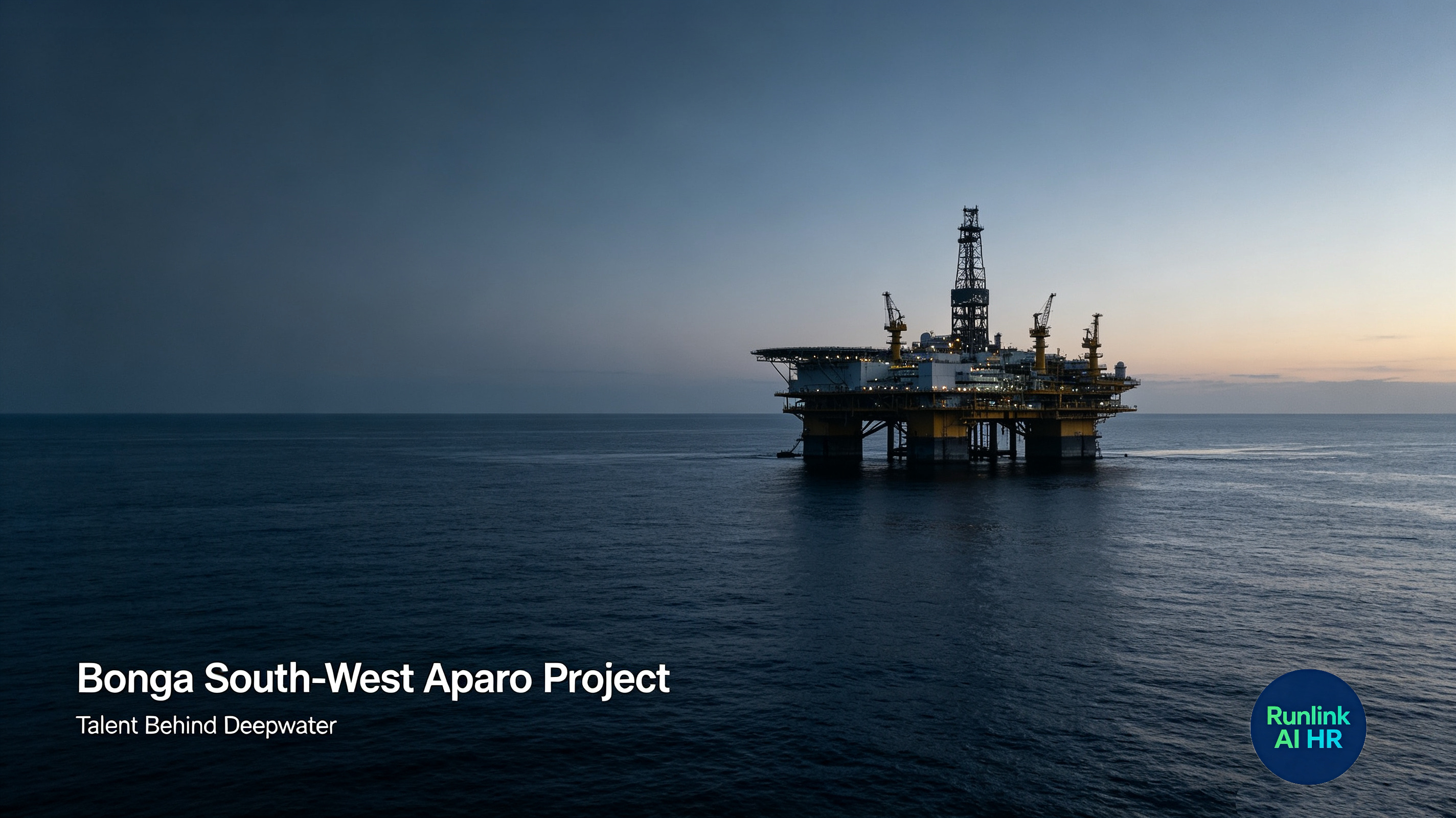
The $150–210 billion BSWA deepwater project is approaching its Final Investment Decision (FID), marking a new round of large-scale manpower demand for Nigeria and West Africa’s offshore energy industry. While massive certified talent pools are available in the local market, oil and gas operators frequently face one core recruitment dilemma: formal certification does not always equal real field-ready operational capability.
The rainy season lingers in Lagos, and major industry news out of Abuja has drawn wide attention within Nigeria’s energy sector.
NNPC (Nigerian National Petroleum Corporation), together with international energy giants, has officially signed supplementary agreements for the large-scale BSWA offshore project. As this $150–210-billion deepwater project steps closer to FID (Final Investment Decision, the official approval for full project construction), a silent talent competition has begun across West Africa’s oil and gas industry.
For years, local content policies enforced by NCDMB (Nigerian Content Development and Monitoring Board, Nigeria’s oil and gas industry regulator) have continuously raised the proportion of local employee participation. The local talent requirement has grown from less than 5% in 2010 to 61% today.
Foreign expatriate recruitment approvals have become increasingly strict, pushing project owners to rely heavily on domestic talent resources.
In the offshore oil and gas industry, IWCF, BOSIET and HUET are standard mandatory certifications for core drilling and completion technical positions. On paper, a large number of local professionals hold complete sets of these official qualifications.
However, there is a well-hidden industry reality: possessing full industry certificates does not guarantee field competence.
In our long-term recruitment interviews, many candidates present polished CVs and complete certification records, and perform logically in basic communication. Yet when required to fully explain standard offshore operating procedures and safety workflows, most candidates reveal obvious logical gaps, misplaced sequences, and missing critical risk-control steps.
This issue is not individual dishonesty, but a structural limitation of local training systems. Most certificate training is land-based, theory-heavy, and simulator-dependent. Candidates can pass exams and obtain official credentials without accumulating sufficient real offshore platform working experience.
Regulators are clearly aware of this widespread talent gap. NCDMB launched large-scale practical skill training programs in recent years and continuously promotes subsea engineering field training, aiming to bridge the difference between certificated knowledge and real-site operational ability.
For energy enterprises and hiring managers, this creates a huge screening challenge. Massive certified candidates flood the recruitment pipeline, but interview teams cannot efficiently identify who is truly field-ready and who only holds paper qualifications.
This is where Runlink AI provides practical recruitment support.
Runlink AI systematically records, sorts, and analyzes candidate interview responses. It automatically identifies vague descriptions, missing logic, and incomplete technical processes. It marks risk points for recruiters without replacing human judgment.
Certificate verification and final competency evaluation remain human-led. Runlink AI only accelerates accurate talent screening, helping enterprises filter truly qualified offshore technical talent before project construction kicks off.
Huge engineering hardware and project investment can be scheduled gradually. But high-quality talent preparation must be completed in advance.
Beneath the grand blueprint of West Africa’s deepwater energy projects lies the invisible competition for real competent talent.
Runlink AI provides specialized oil & gas talent screening, offshore candidate evaluation, and pre-vetted talent pool services for West African energy enterprises.